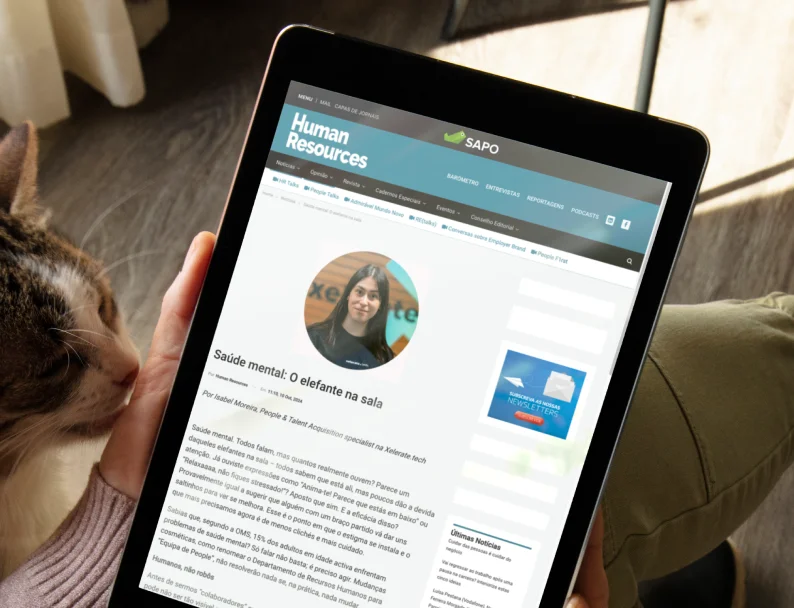
Mental health is something we all talk about, but how many of us really listen? It's like an elephant in the room — everyone knows it's there, but few give it proper attention. We've all heard phrases like "cheer up" or "just relax" — and honestly, they're about as useful as telling someone with a broken arm to go for a jog. That's exactly where stigma takes root, and what we need most right now is fewer clichés and more genuine care.
The WHO estimates that 15% of working-age adults face mental health challenges. Talking about it isn't enough — we need to act. Cosmetic changes, like renaming an HR department "People Team," won't fix anything if nothing actually changes in practice.
We're people first, not "resources." Mental health struggles may be less visible than physical ones, but they're just as real — and they can affect our physical health and performance too. Demanding productivity without offering support is both ineffective and inhumane. Many companies still treat us like parts on a production line rather than individuals, and while things are slowly improving, progress remains slow.
Think about it this way: of 24 hours in a day, we spend around eight working — a third of our time. Once you factor out sleep and basic needs, those eight hours carry even more weight. That's why feeling valued and respected at work isn't a bonus — it's a necessity. Freedom, trust, and flexibility matter enormously: can I pick up my kids without worrying about "clocking out"? Can I work from home when I'm not feeling well? These details make a real difference to our wellbeing and happiness at work.
Fun moments and perks are great, but let's be honest — they don't solve deeper, long-term problems. They're a band-aid on a wound that needs more care. What really builds lasting wellbeing and sustainable productivity is creating an environment where people feel valued and supported every single day.
At my company, we try to put this into practice: stable contracts and partnerships with financially solid businesses to promote security, a flat structure where engineering managers work embedded in teams, and a startup mindset where everyone is heard and respected. We also prioritize diversity and inclusion — gender equality, multiple nationalities and religions — because that diversity is key to fighting stigma. We care about comfort too: snacks, massages, padel, and soon nutrition workshops.
But mental health support has to go beyond perks. It means choosing health insurance that covers mental health and providing ongoing day-to-day support. We can't fix everything, but we try to create an environment of genuine support and respect.
So — when was the last time you checked in on your own mental health? It's okay not to be okay, and there's nothing wrong with seeking professional help. As Michelle Obama said in 2015, "seeking help is not a sign of weakness — it's a sign of strength." Let's all keep that in mind.
Isabel Moreira
Read the full article on Human Resources